
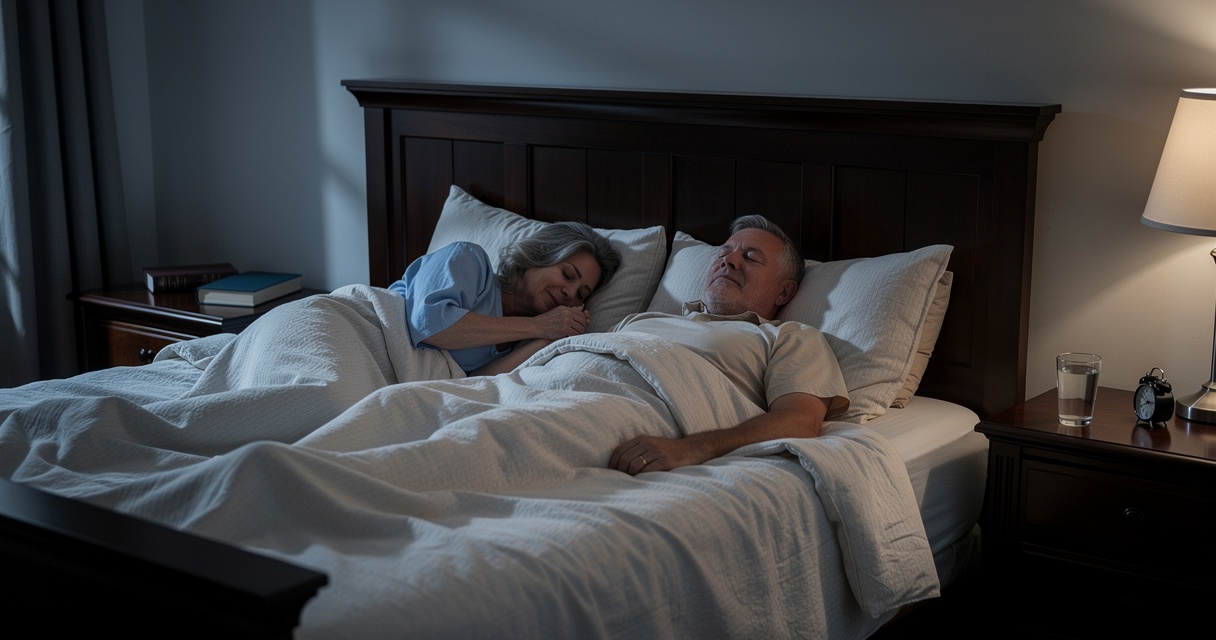

Overnight urinary leakage can interrupt sleep and daily routines for many adults [1]. Protective products work differently depending on how a person sleeps. Matching product features to position can reduce leaks and improve comfort.
Understanding the type of incontinence you’re managing
The causes of urine leakage vary among individuals [2]. Stress incontinence is leakage with physical effort such as coughing or sneezing [2]. Urge incontinence, linked to an overactive bladder, brings a sudden, strong need to urinate and an involuntary release [2]. Overflow incontinence occurs when the bladder does not fully empty, leading to frequent small leaks [2]. Functional incontinence means a person cannot reach the toilet in time due to physical or cognitive limits, despite bladder control [3]. Mixed incontinence combines two or more types, often stress and urge [2]. This article focuses on managing any form of overnight urine loss, noting how sleep position affects protection.
Gravity’s Role in Fluid Redistribution
Gravity changes how fluid moves in the body and within absorbent products during sleep. Lying down alters bladder filling and where urine collects inside protective wear. This matters because the simple act of lying flat for hours makes urine pool in absorbent pull-up underwear differently than it would during daytime activities.
Fluid moving back to the core circulation at night often increases urine production [4]. During the day, gravity helps keep some fluid in the legs [4]. Lying down for sleep allows this fluid to return to the bloodstream [4]. This increases the blood volume the kidneys filter, producing more urine [4]. This extra urine can strain product capacity, especially if position directs flow away from the main absorbent area.
Picture a 65-year-old retired accountant. He drinks a full glass of water with medication every night around 10 p.m. Despite using highly absorbent briefs, he sometimes wakes up with leaks. The increased fluid, plus his body’s natural nightly fluid shift, means more urine is produced than the product can manage in his preferred back-sleeping position.
Side sleeping: how leaks happen and what helps
On the side, urine may flow toward the hip and outer thigh instead of directly into the crotch area of the absorbent product. This tests side gathers and elastic leg openings, especially if the core is narrow.
In practice, urologists often observe that products with wider absorbent areas and strong leg cuffs typically perform better for individuals who sleep on their side. These features are better at containing urine that moves sideways [2].
Consider a 68-year-old woman six months after a hysterectomy. She prefers to sleep on her left side. She noticed that despite using a very absorbent product, she sometimes woke with wetness along her outer thigh. Her continence nurse specialist suggested she consider a style with higher side protection. She tried a product with taller side barriers and found it reduced her leaks to once a week from three times a week.
Back sleeping: fit and rear coverage
Sleeping on one’s back usually directs urine downwards, into the center of absorbent products. This position can make good use of many standard designs. However, if the back panel does not rise high enough or fit snugly, urine can leak upwards toward the lower back. Even a very absorbent product can fail if its shape does not match the body in the sleeping position.
Some clinicians caution that people who sleep mainly on their back might need products with more absorbency coverage in the rear [5]. This is especially relevant for those with high overnight volumes. Many standard products are effective in this position, as their design is meant to capture central urine flow.
A 74-year-old man taking furosemide for heart failure at 6 p.m. often experiences a peak in urine output between 9 and 11 p.m. [4]. When he sleeps on his back, he found that adding a diaper booster pad to the rear of his regular absorbent brief at night stopped the leaks that previously ran up his lower back.
Stomach sleeping and front-focused protection
Sleeping on the stomach is less common in adults managing urine leakage. In this position, pressure can push on the front of the abdomen and bladder. Urine flows forward, stressing the front absorbent panel and waistband of protective undergarments.
Managing leaks here is challenging because many products concentrate absorbency in the middle and back. A subset of urogynecologists argue that for people who consistently sleep on their stomach, using an absorbent brief with an extra pad placed specifically at the front might be necessary [6]. This combination aims to contain the urine.
Adaptations for movement during sleep
Few adults stay in one position all night. Shifts from back to side, and sometimes to the stomach, create leak risks at different points. Products that keep a seal during movement are more forgiving.
Effective designs maintain containment as the body turns, while adding absorbent underpads for bed provides an extra layer of mattress protection. Using dedicated overnight protective underwear provides higher capacity and higher absorbent zones to handle more liquid over longer times [1].
- High leg gathers: These block side leaks when a person turns.
- Elasticized waistbands: A snug, comfortable fit prevents shifting and gaps.
- Wide absorbent core: This provides coverage across the middle and sides, regardless of body position.
- Breathable materials: These assist in protecting skin from moisture and preventing irritation.
When to see a clinician
Talk to a doctor or nurse promptly if you notice any of the following:
- Blood in your urine
- Pain or burning when you urinate
- Sudden onset of incontinence with no clear cause
- Incontinence with weakness, numbness, or trouble walking
- Fever, back pain, or signs of a urinary tract infection
- Incontinence that is rapidly worsening
- Bowel incontinence appearing alongside urinary symptoms
Incontinence is common and treatable. Products help manage symptoms, but they do not replace clinical evaluation, pelvic floor therapy, medication review, or other treatments your clinician may recommend.
Sources
[1] https://health.clevelandclinic.org/stop-full-bladder-killing-sleep (health.clevelandclinic.org)
[2] https://pmc.ncbi.nlm.nih.gov/articles/PMC4713267/ (pmc.ncbi.nlm.nih.gov)
[3] https://pmc.ncbi.nlm.nih.gov/articles/PMC12143063/ (pmc.ncbi.nlm.nih.gov)
[4] https://pmc.ncbi.nlm.nih.gov/articles/PMC3602727/ (pmc.ncbi.nlm.nih.gov)
[5] https://pmc.ncbi.nlm.nih.gov/articles/PMC6056063/ (pmc.ncbi.nlm.nih.gov)
[6] https://pmc.ncbi.nlm.nih.gov/articles/PMC11483088/ (pmc.ncbi.nlm.nih.gov)