

Choosing the right incontinence absorbency level helps limit leaks and maintain comfort. Matching product capacity to urine loss avoids protection that is too little or unnecessarily bulky. The goal is steady containment without skin irritation.
Understanding the type of incontinence you’re managing
Leakage patterns vary with cause, physical responses, and medication effects. Stress incontinence means urine leaks involuntarily when abdominal pressure increases, such as during a cough, sneeze, or exercise [1]. Urge incontinence involves a sudden, strong desire to urinate, followed by involuntary loss of urine [1]. Overflow incontinence occurs when the bladder does not empty completely, leading to constant dribbling [1]. Mixed incontinence combines symptoms of both stress and urge incontinence [1]. The information here applies to choosing absorbent products for these types of urine loss.
Absorbency level classifications
Package labels describe incontinence absorbency levels such as light, moderate, heavy, and maximum protection [2]. These terms indicate the product’s ability to hold fluid. Products offering the lowest absorbency are for minor leaks [2]. Maximum absorbency products are for significant or sudden urine loss [2]. Urology standards suggest that absorbency options should have at least a 20% difference in retention capacity to provide meaningful choices [3].
Selecting protection for different leakage volumes
Start by estimating the amount and frequency of urine loss. Small drips with coughing or laughing often match well with light absorbency pads. Home health aides describe that people with very light, occasional leaks often prefer products that are less visible, such as thin liners. Frequent, larger leaks, especially overnight, call for products with much higher fluid capacity. Continence nurses often report that people select products that are too small, leading to frequent changes that disrupt daily activities. A product that fits poorly or lacks adequate absorbency can lead to skin irritation and reduce an individual’s quality of life.
Light absorbency options
Light bladder leakage liners and pads manage very small, occasional urine leaks [2]. They are thin and designed to catch minor drips [2]. These products offer discretion and feel comfortable under clothing [2]. For new or very mild incontinence, light absorbency products are frequently recommended for initial management [2]. They can support light exercise or brief outings where significant leakage is not expected. Washable containment products are also an option for light urinary incontinence [4].
Moderate absorbency for regular leakage
When leaks occur more often or are larger, a moderate absorbency product may be more suitable. These items, like larger pads or protective underwear, hold more fluid than light options [2]. They maintain discretion while providing increased protection [2]. This level is often chosen for multiple daily leaks that do not involve the entire bladder volume. The added capacity can reduce interruptions across the day.
Heavy and maximum absorbency products
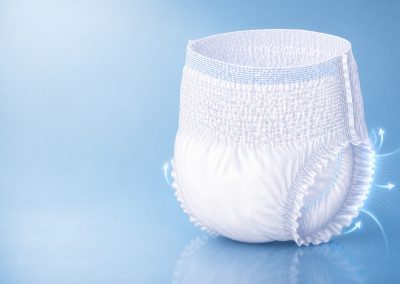
Heavy and maximum absorbency products are for large or full bladder losses, or for managing bowel incontinence [2]. These include protective underwear, briefs with tabs, or all-in-one designs [2]. They provide the highest level of protection [2]. Such products feature high-capacity absorbent cores and leak guards to manage significant fluid volumes [2]. This construction helps prevent leaks [2]. In practice, urologists often observe that patients with limited mobility or cognitive impairments, who may not reach the toilet promptly, benefit significantly from maximum absorbency pull ups, especially at night. This level of protection supports skin health and sleep.
Other product characteristics to consider
Other features beyond absorbency capacity are relevant:
- Fit and Sizing: A properly fitting product prevents leaks, irrespective of its absorbency level. Poor fit can create gaps, leading to leaks even with high absorbency.
- Odor Control: Many products incorporate materials to neutralize odors, which helps maintain confidence and privacy.
- Material and Comfort: Breathable materials can help prevent skin irritation. Soft linings make the product more comfortable for extended wear.
- Ease of Changing: Some products are simpler to change than others. This is an important consideration for caregivers or individuals with dexterity challenges.
NHS guidance indicates that product selection should be based on individual need, considering absorbency, fit, and comfort [5]. However, some clinicians caution that while high-capacity products offer maximum protection, they are not always the most practical or cost-effective for very occasional heavy leaks [6]. This suggests that choosing products sometimes involves balancing fluid capacity with practical cost considerations.
When to see a clinician
Talk to a doctor or nurse promptly if you notice any of the following:
- Blood in your urine
- Pain or burning when you urinate
- Sudden onset of incontinence with no clear cause
- Incontinence with weakness, numbness, or trouble walking
- Fever, back pain, or signs of a urinary tract infection
- Incontinence that is rapidly worsening
- Bowel incontinence appearing alongside urinary symptoms
Incontinence is common and treatable. Products help manage symptoms, but they do not replace clinical evaluation, pelvic floor therapy, medication review, or other treatments your clinician may recommend.
Sources
- ics.org. https://www.ics.org/Publications/ICI_3/v1.pdf/chap4.pdf
- wihb.scot.nhs.uk. https://www.wihb.scot.nhs.uk/wp-content/uploads/2025/01/Guideline-for-the-Provision-of-Absorbent-Incontinence-Management-Products-Adult.pdf
- pubmed.ncbi.nlm.nih.gov. https://pubmed.ncbi.nlm.nih.gov/24018391/
- hi-netgrampian.scot.nhs.uk. https://www.hi-netgrampian.scot.nhs.uk/wp-content/uploads/2020/01/Absorbant-Incontinence-Products-Adults-1.pdf
- elft.nhs.uk. https://www.elft.nhs.uk/sites/default/files/2023-12/foi_da5071_-_appendix_2_-_continence_containment_product_criteria_2019.pdf
- ics.org. https://www.ics.org/Abstracts/Publish/180/000316_poster.pdf