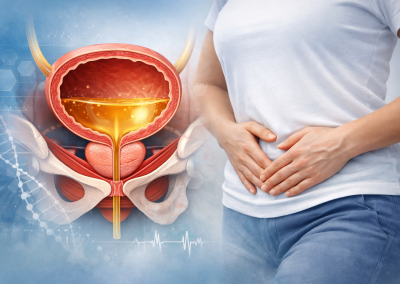


Being overweight can have many negative consequences for the body. Multiple studies have shown that being overweight directly impacts bladder control and incontinence. In fact, obesity is a significant modifiable risk factor for urinary incontinence. Modifiable risk factors are things we can control and change, whereas risk factors that arise from age or genetics are not.
Losing weight can positively impact bladder control, but it also may not be the whole picture and can leave people frustrated when incontinence does not resolve. Understanding how excess weight affects the bladder, as well as other factors that may be impacting it beyond weight, can help you formulate a targeted plan.
As an experienced nurse, I have worked with many patients struggling with excess weight, weight loss, and bladder control issues, and have helped them find a more comprehensive approach to tackle the issues.
How Excess Weight Affects Bladder Control
Excess weight is stored in the body as adipose or fat tissue. This extra fat tissue can be stored anywhere in the body, but it often accumulates around the abdomen or stomach for many people. Excess fat tissue increases intra-abdominal pressure. The increased pressure strains the muscles and sphincters of the urinary system and pelvic floor. Over time, increased pressure can weaken the muscles needed to maintain bladder control. This can lead to urinary incontinence and other bladder control issues.
Bladder control issues associated with excess weight can look like leaking urine when coughing, sneezing, or exercising. It can also present as a sudden urge to urinate with little to no warning, and you may be unable to make it to the restroom on time.
Incontinence associated with excess weight is most often associated with these three main types:
- Stress Incontinence: Urine can leak during activities that increase intra-abdominal pressure and strain the pelvic floor, such as coughing, sneezing, laughing, and physical activity. Stress incontinence is most commonly associated with bladder control and excess weight.
- Urge Incontinence: This occurs when someone has a sudden, strong urge to urinate with little to no warning, and they cannot stop the flow of urine.
- Mixed Incontinence: This is when stress and urge incontinence both occur.
What Changes After Losing Weight?
After losing weight, the intrabdominal pressure can decrease, putting less strain on your bladder and pelvic floor. In one study, people who lost more than 5% of their body weight had a reduction in incontinence episodes by at least 50%.
Incontinence after weight loss can persist for some people, as it can take the body time to adjust, or if it was related to another condition rather than excess weight.
The bladder control issues most likely to improve with weight loss are associated with stress incontinence. People can expect less leakage during everyday activities. Many of my patients report they don’t notice a sudden change, but that over time they recognize they are better able to control the flow of urine, so a random sneeze or burst of laughter doesn’t cause urine to leak.
Why Weight Loss Doesn’t Always Eliminate Bladder Control Issues
The longer the body stores excess weight, the greater the likelihood of irreversible damage to the bladder and pelvic floor. If permanent damage occurs to muscles or sphincters, losing weight will not reverse the damage. Especially with urge incontinence, which is linked with nerve damage, it is less likely to see a reduction in those symptoms than in those experienced due to stress incontinence. There may still be some improvement in bladder control due to reduced pressure, but some symptoms may persist.
Bladder control can also be hard to track in terms of the severity. As someone loses weight, the subtle improvement in bladder control may go unnoticed. I have worked with patients who have lost significant amounts of weight from targeted diet and exercise, weight loss surgery, or from an injury or illness. None of them woke up one day and said, “Wow, I’m no longer experiencing incontinence.” Over time, there were subtle changes; maybe they needed fewer products or lower-absorbency products.
Unfortunately, maintaining weight loss can be difficult. If someone loses a significant amount of weight but then gains some back, it can cause varying levels of bladder control issues. This makes it harder to track and note long-term improvements.
A scenario where weight loss doesn’t improve bladder control issues is when someone has other underlying conditions in addition to being overweight. Patients I work with often have co-morbidities such as diabetes, and understanding how diabetes can affect bladder function helps set realistic expectations for recovery. Diabetes is known to cause nerve and vascular damage throughout the body. This can damage nerves in the bladder that lead to urge incontinence. While losing weight can improve diabetes management, it can not reverse nerve damage that has already occurred. These patients feel frustrated when losing weight does not resolve their leaks or incontinence. However, losing weight can still reduce symptoms even if it doesn’t resolve them.
Weight Loss Surgery and Bladder Control
Weight loss surgery is a more invasive way to lose weight than diet, exercise, and behavior modifications. Weight loss surgery, also known as bariatric surgery, is not performed to treat incontinence. However, bladder control after bariatric surgery has been studied and shown to improve significantly. Weight-loss surgery carries risks and is usually not a first-line treatment for excess weight. Deciding to undergo weight loss surgery is a complex decision that needs to be made with a treating provider. It requires a long-term commitment but can significantly improve overall health and well-being.
For women, a reduction in incontinence episodes was most likely to occur within 1 year of weight-loss surgery; however, this improvement persists for 3 years post-surgery. For men, the chance of improvement was highest during the first year. Rapid weight loss within the first year after surgery is the reason for significant improvements in bladder control, as it directly reduces pressure on the bladder and pelvic floor.
Diet and Exercise to Lose Weight and The Impact on Bladder Control
Diet and exercise are typically the first-line treatment for excess weight. I often hear from patients that they avoid exercise, as it can cause urine leakage. It’s possible to manage bladder control issues while exercising to lose weight. Often, I have to help patients find absorbent pull-up underwear that can handle unexpected leaks. Understanding that increased leakage during exercise is expected and that exercise can help them lose weight, thereby reducing incontinence, can be a hard barrier to overcome.
I always recommend that anyone trying to lose weight work directly with a dietician. This is someone who can review all your medical conditions and medications and develop a targeted plan that meets your needs. This is crucial to avoid overeating, undereating, or becoming malnourished. They can also provide coaching for certain foods to avoid that cause bladder irritation and can worsen incontinence.
How to Manage Bladder Control Issues During and After Weight Loss
Managing bladder control when you have changing incontinence needs can feel challenging and even frustrating at times. When I am working with patients going through weight loss, there are a few key areas I work with them on:
Bladder Training: Post-weight-loss bladder function can vary. It may take the bladder some time to adjust to the body’s reduced weight and pressure. Bladder training is a great option before, during, and after weight loss. It involves urinating at timed intervals, which are gradually adjusted to increase how long someone can go without needing to use the restroom or experiencing urine leakage. It helps to strengthen the bladder muscles gradually.
Pelvic Floor Therapy: Pelvic floor physical therapy is a specialized approach that improves the strength and function of the pelvic floor muscles in men and women. Pelvic floor therapy is often associated with women after childbirth, but it is actually extremely helpful for men and women experiencing bladder control issues. Working with a pelvic floor physical therapist can improve symptoms associated with bladder control and incontinence pre- and post-weight loss. It is normal to experience changes during weight loss that require fine-tuning of exercises and additional work to strengthen and coordinate the pelvic floor muscles.
Incontinence Products: As incontinence needs change, most people will need to use incontinence products during their weight-loss journey. Understanding the different product types and absorption levels can help customize what will work. I recommend keeping several product types on hand, but not buying too much of any one size at a time, especially during rapid weight loss, which is common after weight-loss surgery. A great option for anyone experiencing light to moderate urine leakage is to use adult light incontinence pads, as these are often one-size-fits-all and can accommodate weight changes. Always follow manufacturer sizing guides and re-measure often to ensure you have the best fit.
Looking Ahead
Bladder control improves for most people after undergoing weight loss. The improvement may be barely noticeable, or, for some, it can completely resolve their symptoms. Weight loss benefits all parts of your body, so it is worth discussing with your provider and developing a plan to lose weight safely while also managing bladder control issues.