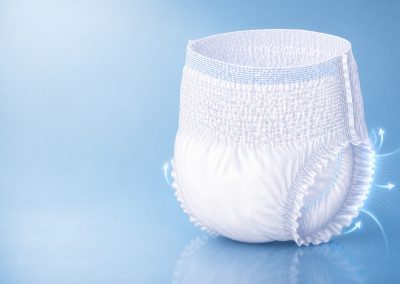


Managing bladder leakage calls for protection and discretion. A common concern is whether incontinence wear makes noise with movement. This article reviews quiet adult diapers and pull-up styles and outlines ways to reduce rustling without sacrificing protection.
Understanding the type of incontinence you’re managing
Incontinence varies for each person based on its causes, body types, and medicines. Stress incontinence is when urine leaks during activities like coughing, sneezing, laughing, or exercise [1]. Urge incontinence, also called overactive bladder, involves a sudden, strong need to urinate followed by accidental leakage [1]. Overflow incontinence happens when the bladder does not empty completely, causing frequent dribbling [1]. Functional incontinence occurs when a person cannot reach the toilet in time due to physical or mental issues [1]. Mixed incontinence combines symptoms of both stress and urge incontinence [1]. Each type needs a specific approach to selecting and using protective garments.
Garment material and sound generation
The outside covering of absorbent garments affects how much sound they make [2]. Older options often feature a plastic-like outer layer [2]. This type of material prevents leaks effectively [2]. It can also produce crinkling sounds when it rubs against clothes or skin during movement [2]. Urologists often find that patients prefer quieter solutions. This is especially true for social events or work settings where discretion is a priority.
Newer absorbent undergarments, particularly adult pull-ups, frequently use soft, cloth-like materials for their exterior [3]. These fabrics are generally quieter and more comfortable [3]. They feel more like regular underwear [3]. Such materials help minimize sound while still preventing leakage [3].
Strategies to reduce rustling
Even with cloth-like options, several steps can further lower any sound. Home health aides describe a common situation: wearers are more aware of sounds than others, but the desire for discretion remains.
- Layer clothing: Wearing close-fitting undergarments, such as briefs or compression shorts, over the absorbent garment can hold it snugly. This reduces rubbing and movement of the product’s outer layers, which can cause sound. For instance, a pair of tight boxer briefs or leggings under an outfit can keep a pull-up secure and quiet any minor rustling.
- Correct fit: An absorbent product that is too large can bunch or shift, creating more sound [3]. Conversely, an item that is too small might be uncomfortable or not provide sufficient protection [3]. Choosing the right size ensures a snug fit that moves with the body [3]. This matters because an improper fit can compromise discretion and lead to leaks.
- Absorbency considerations: When evaluating incontinence product absorbency levels, products with higher absorbency often contain more material layers [4]. This can increase bulk and potentially increase sound [4]. Modern designs keep high-absorbency items discreet [4].
Product design for quiet use
The internal construction of absorbent garments also contributes to their quiet performance. Manufacturers use superabsorbent polymers (SAPs) to contain liquid [4]. This allows for thinner items with high capacity [4]. Thinner items generally create less bulk and less friction sound [4]. Some continence specialists are divided on whether higher absorbency always means more bulk. However, they agree that a product that remains flexible and moves with the body without stiff parts will be quieter. This means that comfort and quiet often result from garment design that balances absorbency with material flexibility. For example, LivDry daytime protective underwear, designed for moderate leakage, offers a capacity of 1,492 mL in a pull-on style meant for discretion under clothing. For heavier needs, LivDry Ultimate Protective Underwear provides 2,422 mL of absorbency in maximum absorbency pull ups designed for discretion. In practice, this is where product engineering aims to minimize detection during daily activities.
When to see a clinician
Talk to a doctor or nurse promptly if you notice any of the following:
- Blood in your urine
- Pain or burning when you urinate
- Sudden onset of incontinence with no clear cause
- Incontinence with weakness, numbness, or trouble walking
- Fever, back pain, or signs of a urinary tract infection
- Incontinence that is rapidly worsening
- Bowel incontinence appearing alongside urinary symptoms
Incontinence is common and treatable. Products help manage symptoms, but they do not replace clinical evaluation, pelvic floor therapy, medication review, or other treatments your clinician may recommend.
Sources
- ncbi.nlm.nih.gov. https://www.ncbi.nlm.nih.gov/books/NBK62711/
- nafc.org. https://nafc.org/bhealth-blog/understanding-the-differences-in-incontinence-products/
- nafc.org. https://nafc.org/bhealth-blog/how-to-choose-the-best-adult-diaper-for-your-needs/
- pubmed.ncbi.nlm.nih.gov. https://pubmed.ncbi.nlm.nih.gov/24018391/