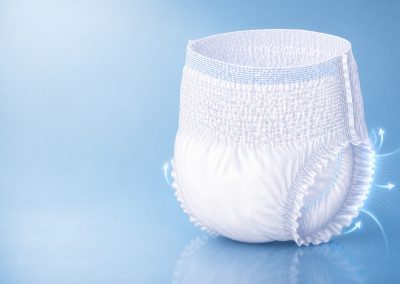


Booster pads add absorbency to adult incontinence products, helping to prevent leaks [1]. Correct placement and secure adhesion determine how well they perform. Misplaced pads tend to feel uncomfortable, reduce performance, and lead to more leaks. This report reviews booster pad placement adult brief strategies to limit shifting and leakage.
Understanding the type of incontinence you’re managing
Leaks do not follow one pattern. Stress incontinence means urine leaks during activities like coughing or lifting, due to pressure on the bladder. Urge incontinence, also called overactive bladder, involves a sudden need to urinate followed by accidental leaks. Overflow incontinence occurs when the bladder does not empty fully, leading to frequent dribbling. Functional incontinence happens when physical or mental problems keep someone from getting to the toilet in time. Mixed incontinence includes both stress and urge symptoms. How incontinence is managed depends on individual causes, body differences, and medications.
Securing placement inside the brief
Center the booster pad in the brief’s crotch to intercept flow. Place the booster pad where leaks occur most. This helps catch urine directly [1]. For many users, that means aligning the pad along the brief’s absorbent core from front to back so it lies flat.
Adhesion limits movement. Many booster pads have an adhesive strip on the back [1]. The strip anchors the pad to the inside of the brief so it stays put during movement and position changes.
Frequent placement mistakes
If the booster sits too far forward or back, urine may miss the added absorbency and track to the brief’s edges. A geriatric nurse describes how patients, especially those with difficulty moving their hands, sometimes place booster pads unevenly. This often leads to leaks from the sides of the brief.
Height and alignment matter. For women, urine often flows toward the center. For men, it may start further forward. Adjusting placement to match that pattern helps. Whether placed inside briefs or protective underwear, a booster pad that is not centered or well-attached can bunch up. This creates gaps for urine to escape [1].
Solutions for Bunching and Slipping
Stopping bunching and slipping involves selecting the right product and using it correctly.
- Always use the adhesive strip to secure the pad firmly inside the brief.
- Using contoured incontinence pads can help. Some booster pads are made to fit the body’s curves. This helps them stay in place and reduces bunching [1].
- Make sure the main tabbed incontinence briefs fit snugly but comfortably. A loose brief allows the booster pad to shift more easily. Clinically, urologists often see that patients wearing briefs that do not fit well experience more problems with booster pad movement.
- When putting on the brief, smooth the booster pad completely against the brief’s absorbent core. Ensure it lies flat before wearing the brief.
- Because body shapes and leakage patterns differ, finding the right incontinence product and placement combination may require some testing.
The Role of Product Selection
The type of booster pad affects how much it might shift. Flow-through booster pads absorb liquid. They then pass any extra fluid to the main product beneath [1]. This makes better use of the entire absorbent system and helps match individual incontinence product absorbency levels.
Some clinicians note that very thick or stiff booster pads might bunch more. They could also create uncomfortable pressure points, especially for people who sit for long periods. Continence specialists are divided on whether thicker booster pads always shift more. However, many agree that a flexible pad with secure adhesive works better for active users.
When to see a clinician
Talk to a doctor or nurse promptly if you notice any of the following:
- Blood in your urine
- Pain or burning when you urinate
- Sudden onset of incontinence with no clear cause
- Incontinence with weakness, numbness, or trouble walking
- Fever, back pain, or signs of a urinary tract infection
- Incontinence that is rapidly worsening
- Bowel incontinence appearing alongside urinary symptoms
Incontinence is common and treatable. Products help manage symptoms, but they do not replace clinical evaluation, pelvic floor therapy, medication review, or other treatments your clinician may recommend.